








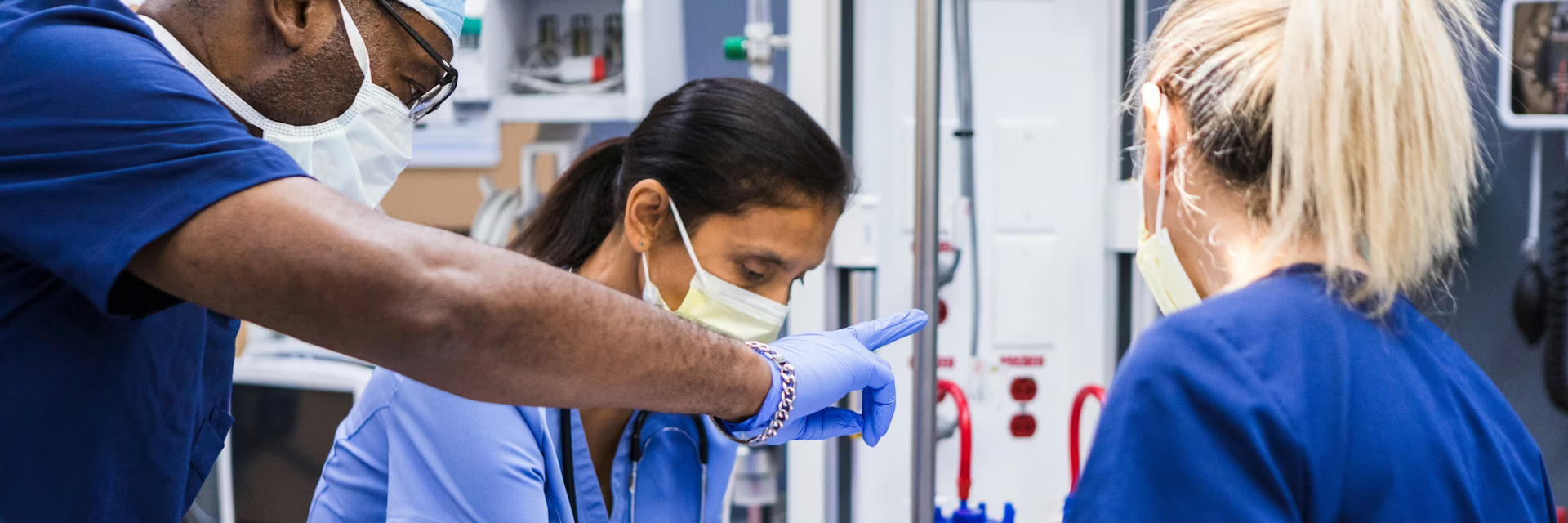
 When someone is badly hurt, their potential for survival often depends on what happens in the first minutes after they arrive at the hospital. SDI Productions/E+ Collection/via Getty Images –
When a trauma patient enters the emergency department, their potential for survival often depends on what happens within the first minutes after their arrival. After studying trauma resuscitation teams at UPMC Presbyterian in Pittsburgh, the largest major trauma center in Pennsylvania, it’s clear that trauma teams aren’t organized ahead of time – they’re formed on the fly. Some team members may have worked together many times before, while others may be meeting for the first time.
You might also like




Want to write?
Write an article and join a growing community of more than 221,000 academics and researchers from 5,467 institutions.