





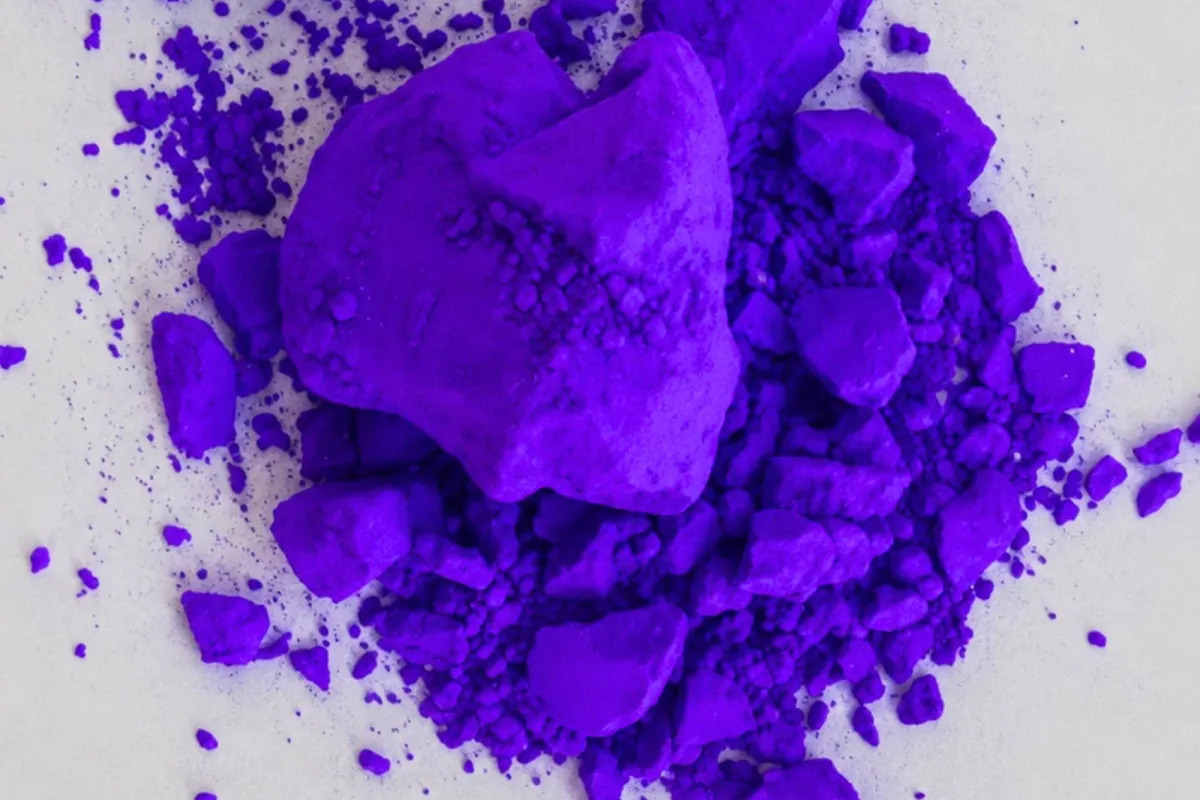
 The MOF (ZIF-67) pigment in all of its purple glory. (Yang et al., Small, 2026) –
Still, it’s hard to deny the science – white is the coolest choice. Quite literally. By reflecting a wide spectrum of colors, materials that lack pigment have a distinct advantage in beating the heat.
A breakthrough by researchers from Zhengzhou University, Adelaide University, the University of South Australia, and Central China Normal University could one day help me chill out when the temperatures peak without crimping my style.
The team developed a process that combines a metal-organic framework (MOF) with zinc oxide nanoparticles to create a purple-hued fabric that releases thermal energy with relative ease.
“We have traditionally had to make a choice between cooling performance and appearance,” says Adelaide University materials engineer Jun Ma.
“Our research shows that we can have both. We can make a fabric that looks purple, but at the same time reflects most of the sun’s energy and releases heat very efficiently.”
Next to black, purple is just about one of the warmest colors we could wear. Our Sun emits a large amount of radiation in the mid-optical frequencies – what we might think of as the greener part of the spectrum. These happen to also be the very wavelengths that purple pigments absorb and turn into heat.
ZIF-67 is a cobalt-based MOF that only absorbs light in the optical region, with a high degree of reflectivity in the near-infrared. It also emits a fair amount of radiation in the mid-infrared region, helping it shed heat rather than allow it to build up.
And it happens to be a wicked shade of bright purple.
To turn the MOF into something we can wear, the team developed a single-step method of electrospinning thermoplastic polyurethane fibers.
The resulting material reflects nearly 88% of incident sunlight while emitting just over 96% of its light in the mid-infrared range. Including zinc oxide nanoparticles allowed the fabric to absorb near-ultraviolet light.
In tests outside on a sunny day in Zhengzhou, China, 5-centimeter-square (around 2-inch-square) swatches of the purple cloth cut temperatures by an impressive 5.6 degrees Celsius. Similar cuts of white polyurethane reduced the temperature by just 3.1 degrees Celsius.
At night, the difference was even more extreme. The purple threads were 3.4° Celsius cooler, compared with a decline of just 1.2° beneath the white material.
Putting the material through its paces, the researchers showed it repelled water and kept its cool even after 50 washes.
OK, so maybe purple isn’t everybody’s style. The researchers are confident that they can find other MOFs to expand their palette.
“The long-term opportunity is to move beyond the idea that cooling fabrics have to be white,” says Yangzhe Hou, a PhD candidate at Adelaide University’s School of Chemical Engineering.
“However, there is enormous potential to combine color, comfort, and cooling performance in the next generation of textiles.”
As the world warms, the need to reduce the risk of heat stroke will move beyond a desire for comfort and into the realm of medical necessity.
It’s nice to know that science may have my back when it comes to …[for the balance of this quite interesting article please visit: https://newatlas.com/chemistry/purple-cool-summer-fashion]
This research was published in the journal Small.
Source: Adelaide University
–
Tags