





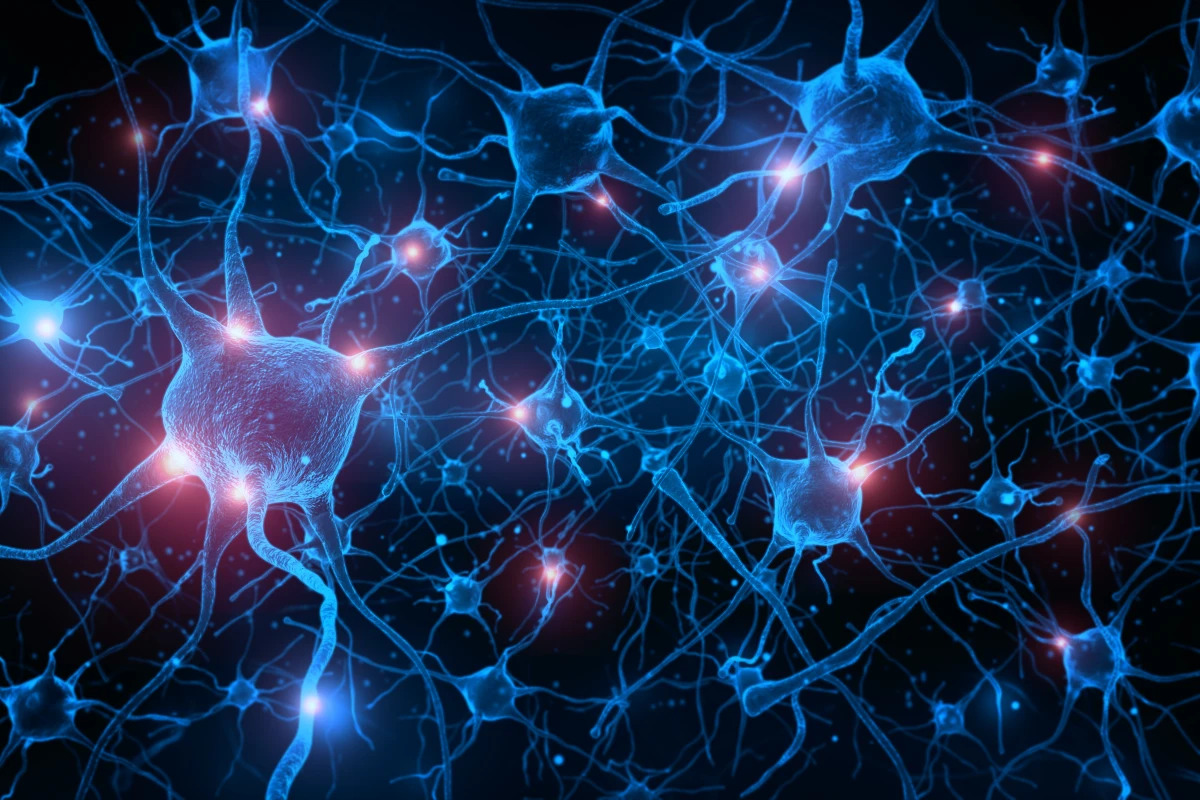
 The linked-up neural chips divided tasks between them to complete tests with more accuracy and efficiency. Depositphotos –
Presenting this new model at the first International Conference on Organoid Intelligence in the US this week, Australia’s Cortical Labs presented its new system called, quite fittingly, HIVE.
The system involves linking up 15 of the company’s breakthrough CL1 biological computers, with the idea that instead of one machine powered by a group of brain cells solving problems and learning tasks, perhaps teamwork would take it to another level.
While more brainpower doesn’t automatically lead to success – anyone who has done a group project will be acutely aware of this – HIVE’s CL1 machines appeared to divide different aspects of the task presented, sorting into the most efficient way to an end point. This isn’t anything the scientists could “teach” the lab-cultivated neurons; they just figured it out once they became part of a bigger network.
“Biological computing has enormous potential, but useful systems cannot depend on a single culture performing perfectly every time,” says Dr Brett Kagan, co-founder and CEO of Cortical Labs.
“Nature solves complex problems collectively,” he adds. “Brains distribute information across specialized regions, while hives rely on many workers each with their own functions contributing to a shared outcome. HIVE applies that same principle to biological computing, creating systems that can be more consistent, resilient and capable than any individual culture.
“Discrete neural information processing systems working together is not new to nature, except now we have a scale that can transcend physiological limits, made possible by the incredible control, scale, and hardware integration allowed by Cortical Labs’ CL1 platform.”
The HIVE setup isn’t just scalable but more stable, according to the team.
Since they’re living cells, one group of neurons might perform well one day and be lax the next. Combining several groups helps maintain performance by sharing the load. It also allows the system to keep operating if one group stops responding for any reason.
In a test involving the recognition of symbols, Cortical reports that linking up seven biological computers increased accuracy in results from around 80% to 99%.
Another test involved HIVE guiding a virtual character through a grid to find a specific target. The team compared their system with the conventional AI Deep Q Network (DQN), which uses algorithms rather than brain cells.
DQN managed about 32% of the maximum score, while the best individual Cortical computer got to 40%. When several biological computers weighed in on which moves to make, the score jumped to around 70%. Dividing the task between specialist biocomputing groups returned even higher results (about 80%).
It’s important to note that these are preliminary results, and limited to the experimental design and the AI model HIVE was being measured against. But the Cortical Labs team says it makes a strong case for the collective work of neural network computing, rather than using these machines individually.
Naturally, the team now wants to unravel how the neurons are signaling and processing feedback across these connected machines, and also see if adding more connections could shift the needle even further in the right direction.
“One culture might perform particularly well on a given day while another does not,” says Johnson Zhou, a scientist at Cortical Labs. “When cultures work together, those individual differences have less influence over the final result. HIVE gives us a way to manage that variability while drawing on the adaptability that makes biological systems so powerful.”
Practical applications aside, this kind of system is a far more energy efficient way of harnessing machine learning.
The research was …[for the balance of this extremely interesting article please visit: https://newatlas.com/ai-humanoids/living-computers-forge-a-hive-mind-and-work-together-to-outsmart-ai/]
–
Source: Cortical Labs