








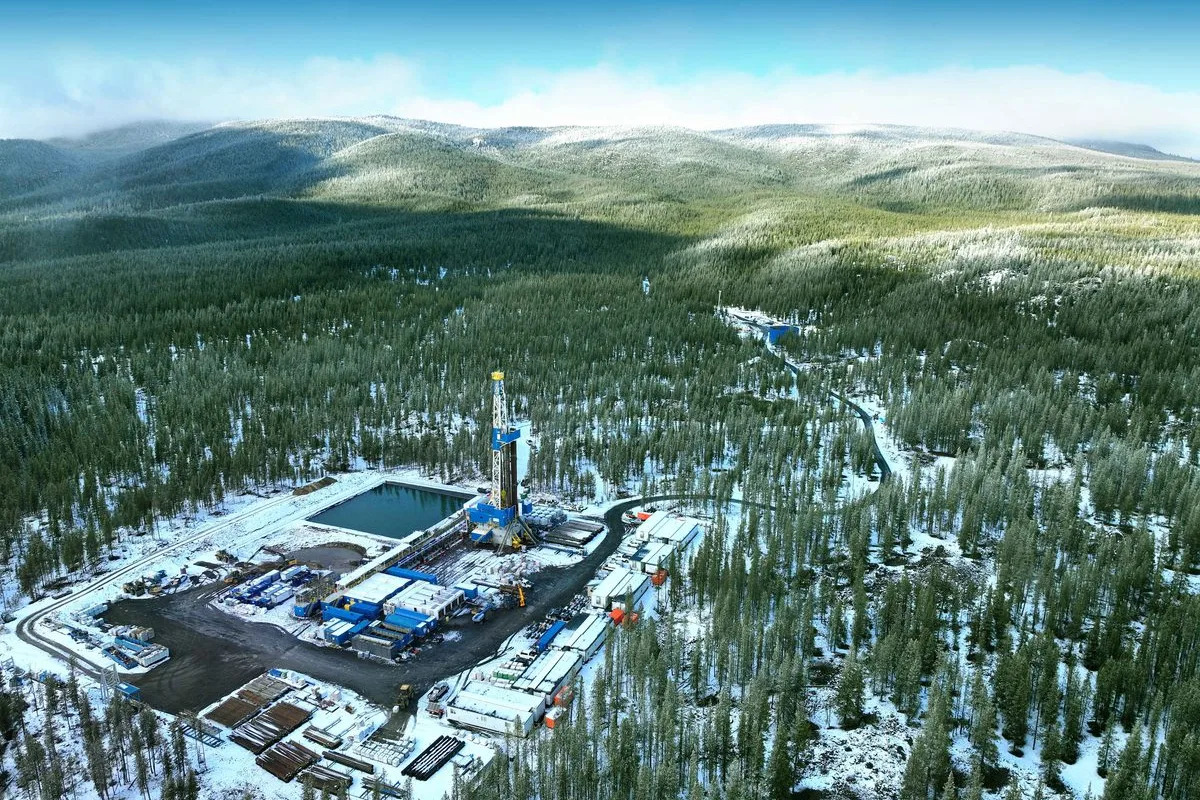
 Quaise’s Project Obsidian plant. Quaise Energy –
Data centers aren’t as new as many people think. In fact, they’ve been around since the 1970s, when miniaturization and the introduction of desktop computers shifted data processing away from individual mainframes to local networks. The development of the internet, server technology, cloud computing, and now what is popularly known as AI has resulted in the explosion of these centers into gigantic installations – some individual campuses requiring hundreds of megawatts, and the global sector collectively consuming tens of thousands of megawatts of continuous power.
This puts huge demands on electricity grids around the world, forcing controversial policy gear shifts from governments whose energy plans were built around strict environmental targets and an assumption of flat demand during the transition from fossil fuels and nuclear to renewables. Add in a bevy of political controversies that we needn’t get into here, and tech companies have found themselves in something of a bind.
Specifically, data centers have to find ways to get the power they need to operate while mollifying objections from local communities. One way of doing this is by not only building the racks and circuit boards for processing and moving data, but also finding independent means of getting electricity without ruffling feathers.
Some companies have committed to building or restarting nuclear power plants, but Google has taken a different approach with its agreement with Quaise.
Geothermal is an established form of power generation, but it has traditionally been confined to a few locations where heat circulating from the Earth’s mantle comes close enough to the surface to tap.
A major part of the problem is the limitation of conventional drilling technology. Ideally, a geothermal plant wants to tap as high a temperature as possible, and that usually means drilling deep into hard crystalline rock. Conventional rigs start hitting the law of diminishing returns when temperatures pass roughly 400 °F to 500 °F (200 °C to 260 °C) – usually around two to three miles (3 to 5 km) down – where extreme heat destroys drill bits, seals, and downhole electronics.
Quaise is working to bore as deep as 12 miles (20 km) into the Earth’s crust, where temperatures can reach 932 °F (500 °C). Even reaching 705 °F (374 °C) pushes water into a supercritical state, where it becomes “hyper-efficient” and yields as much as 10 times more energy per well. By unlocking ultra-deep heat, geothermal power plants could eventually be built almost anywhere on Earth.
That’s all very well and good, but how to achieve this? Quaise uses a system called a gyrotron, which is a high-power vacuum tube originally developed in the Soviet Union and adapted by researchers at MIT to heat plasma in nuclear fusion reactors. It generates high-frequency millimeter-wave radiation that heats molecules inside crystalline rock until it melts and vaporizes, allowing a purge gas system to clear the hole without a physical drill bit touching the rock.
Project Obsidian, Quaise’s flagship utility-scale facility on the southern flank of Oregon’s Newberry Volcano, will put this vision on a commercial path. Under the new agreement, the always-on baseload plant will support Google’s existing data center infrastructure in The Dalles, Oregon, and the surrounding grid beginning as early as 2030. Because volcanic heat sits closer to the surface at Newberry, Phase 1 will use conventional drilling to reach superhot conditions, before transitioning to Quaise’s proprietary millimeter-wave rigs in Phase 2.
“We started Quaise to make the Earth’s most abundant energy source universally accessible — and this agreement marks a critical next step, not just for Quaise but for the entire clean energy sector,” said Carlos Araque, CEO and President of Quaise Energy. “Together with Google, we are building the commercial foundation for superhot geothermal and cementing the United States as …[for the balance of this fascinating article please visit: https://newatlas.com/energy/google-quaise-rock-vaporizing-geothermal-tech-data-center-power/]Source: Quaise Energy
