








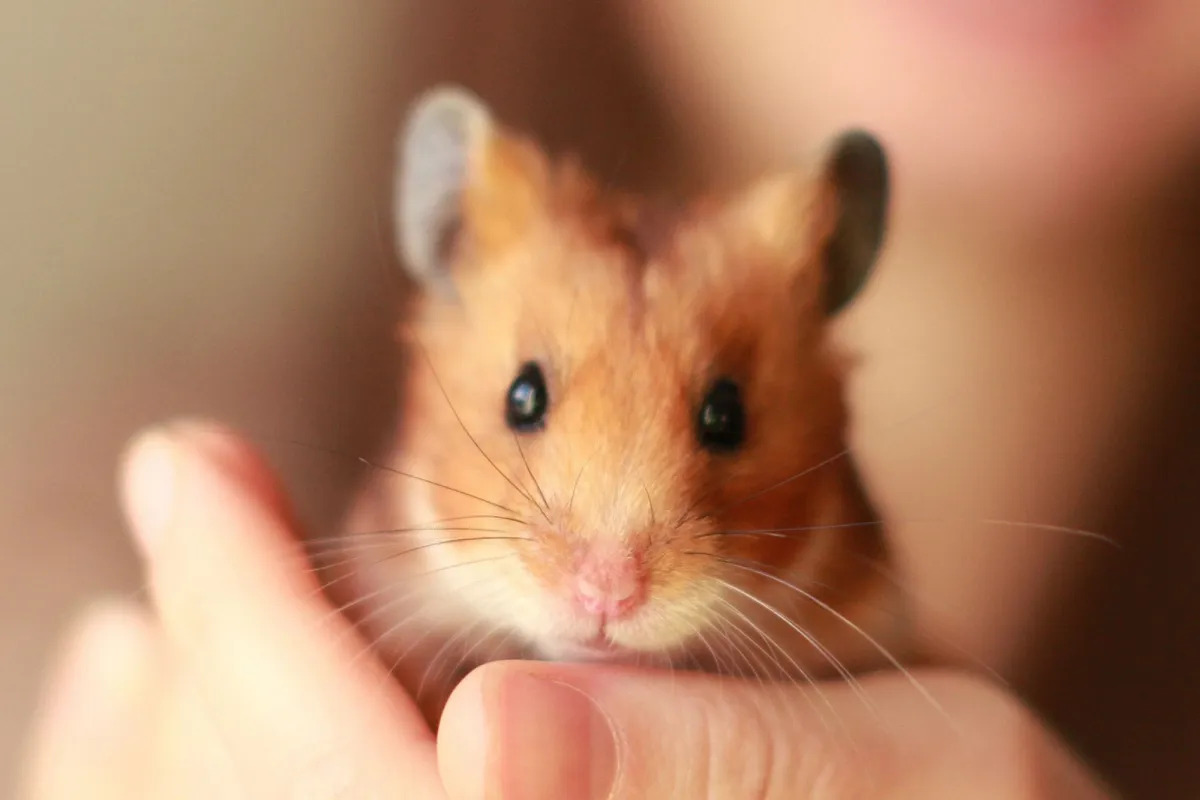
 Hibernating animals, like hamsters, display neurological changes that could help us better understand the brain’s response to Alzheimer’s. marmixer/pixabay/Canva –
A team led by researchers at VIB-KU Leuven Center for Neuroscience in Belgium found that the brain’s resident immune cells, known as microglia, switch on a number of the same genes during hibernation as they do in people with AD.
The resemblance was strongest for patterns linked to the early stages of the disease, even though the researchers detected no amyloid plaques in the hamsters’ brains.
Hibernating hamsters may seem an unlikely place to investigate a disease that progressively erodes memory and thinking in humans. Yet the connection goes back more than two decades to experiments on a protein called tau.
In healthy neurons, tau helps stabilize the internal scaffolding that supports the cell. In AD, abnormal forms of the protein collect in tangles inside neurons. Tau in these tangles carries an unusually large number of chemical tags called phosphate groups, a change known as hyperphosphorylation.
In the early 2000s, researchers discovered that tau in hibernating European ground squirrels (Spermophilus citellus) picked up phosphate tags at many of the same sites implicated in AD. The tagged proteins didn’t assemble into the characteristic tangled fibers, however, and the changes reversed once the animals woke from their slumber.
A 2011 study then found the suspicious tagging in Arctic ground squirrels (Urocitellus parryii) and American black bears (Ursus americanus).
All three animal models in these two papers showed elevated tau phosphorylation during hibernation, with differences between the species and brain regions.
The findings raised an intriguing question: What was happening in the animals’ brains that allowed them to weather these brief periods of neurological change?
In a search for clues, researchers tricked a group of male golden hamsters (Mesocricetus auratus) into entering hibernation. They compared animals in the lowest arousal state, known as torpor, with hamsters that had briefly roused while still in hibernation, as well as active controls.
By analyzing RNA from cells in a brain region involved in memory, the team could see which genes had changed activity in which cells.
“Surprisingly, although Tau is mainly found in neurons, the biggest changes during hibernation occurred in microglia, the brain’s immune cells,” says the study’s first co-author Pablo Largo-Barrientos.
During torpor, the cells’ branching extensions grew shorter and thinner, and many cells accumulated fat droplets. As the animals roused, the microglia’s shape and fat accumulation began to resemble those of active hamsters once again.
The animals’ genetic activity also changed, with some cells expressing more genes involved in inflammatory signaling.
The team compared those patterns with existing data from people with Alzheimer’s and from a mouse model in which human microglia were exposed to amyloid pathology. As the hamsters roused from torpor, their microglia resembled a human inflammatory state similar to that in early AD. By contrast, inflammatory states evident in later stages of the disease showed little resemblance to those seen during hibernation.
The researchers propose a couple of possible explanations. The shared inflammatory response could help brain cells better handle stress, or it could simply reflect what microglia do when their environment changes. The study measured gene activity and cell structure, leaving open questions of whether those shifts are protective and what triggers them in each setting.
“Studying these changes in a natural physiological process gives us a new way to investigate processes that also occur in dementia,” says neuroscientist and senior author Patrik Verstreken.
What hibernation gives researchers is a way to follow that response as it develops and subsides. By testing which changes help a hamster’s brain recover as it wakes from a stressed state, they may be able to distinguish the immune activity that benefits neurons from the …[for the balance of this very interesting article please visit: https://newatlas.com/brain/alzheimers-dementia/hibernation-insights-alzheimers-progress/]
–
The research was published in Science Advances. Source: VIB
