








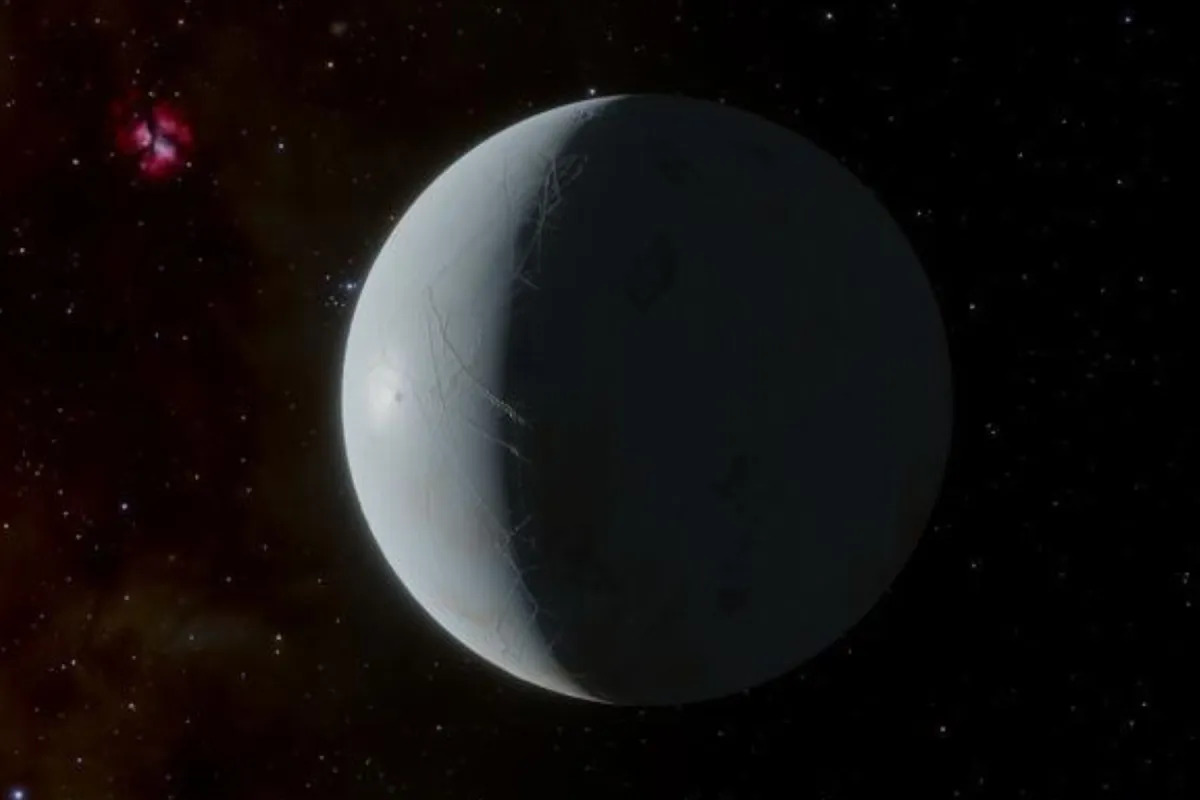
 An artist’s impression of the hypothetical Planet X2, which could be hiding beyond Neptune. Patryk Sofia Lykawka et al. –
–
The latest chapter of this decades-long space serial has just dropped with the planetary equivalent of overturned furniture in the wake of a break-in.
Patryk Lykawka, an astronomer from Kindai University in Japan, together with University of Washington’s Pedro Bernardinelli and Jonathan Horner from the University of Southern Queensland, simulated 4.5 billion years of our Solar System’s evolution to see whether the presence of an unaccounted-for planet could account for the wonky arrangement of icy bodies beyond Neptune.
They call the hypothetical world Planet X2, nodding at the canon of Planet X research while making clear its distinction from previous proposals.
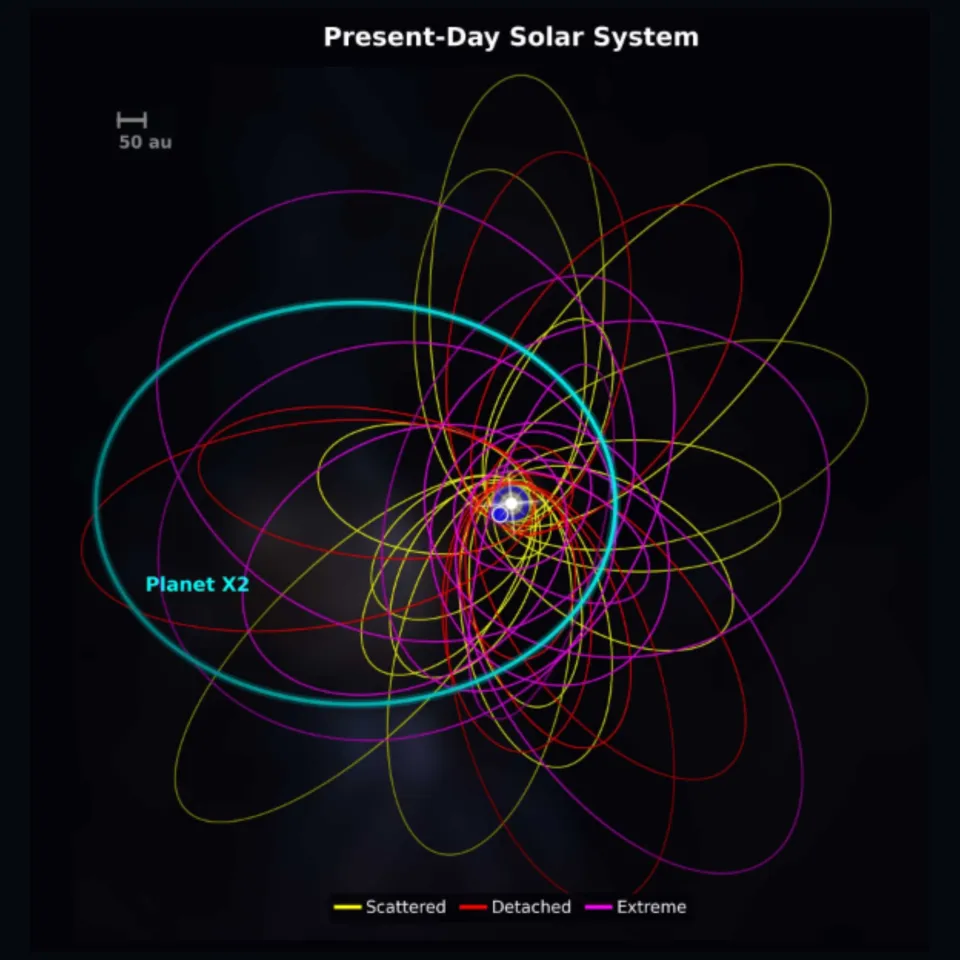
Most of the familiar inhabitants of the Kuiper Belt orbit in a broad disk beyond Neptune. Farther out, things start to get a bit loosey-goosey.
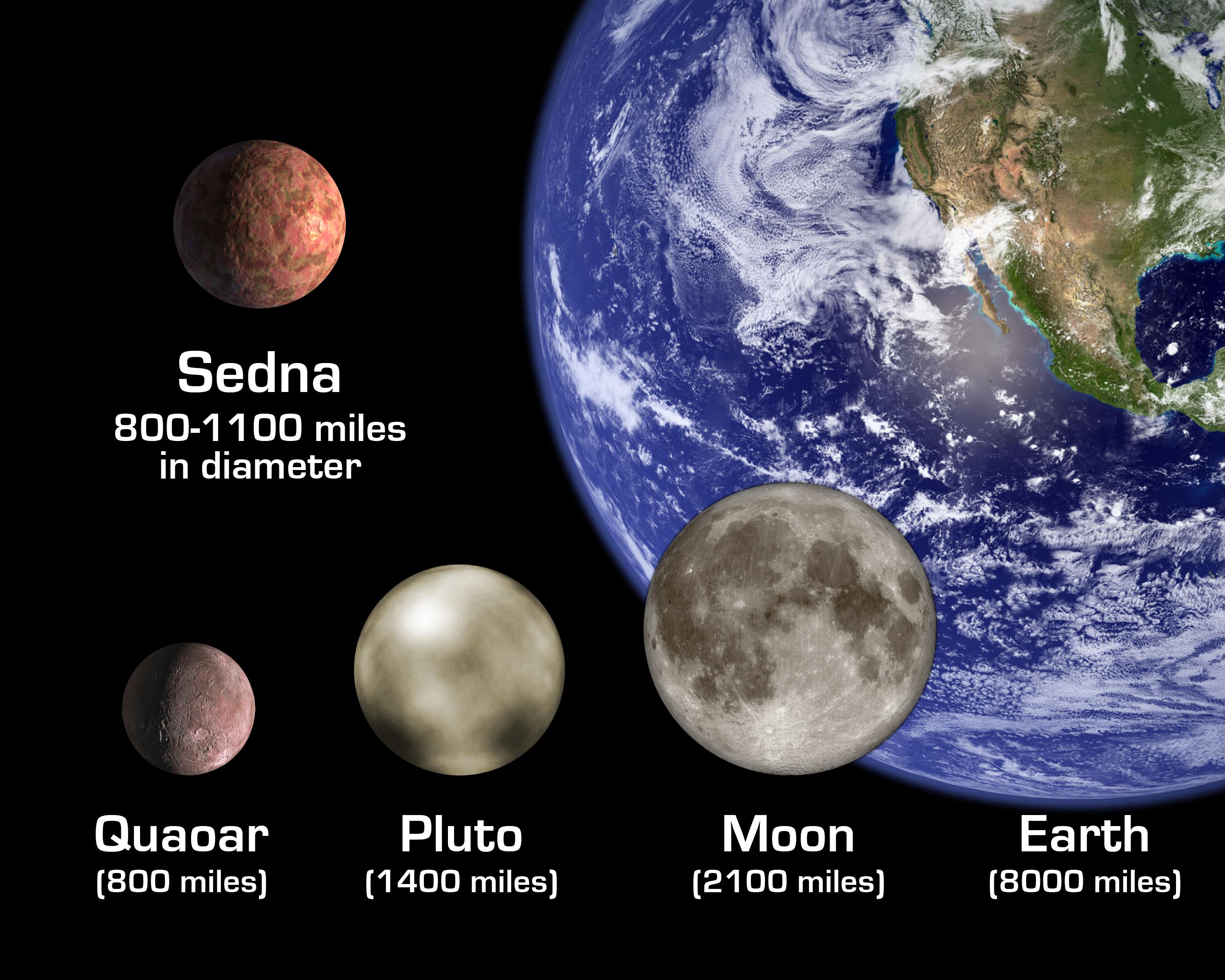
Some icy bodies follow orbits tilted more than 45 degrees to the plane of known planets. Others are described as detached, meaning that even at their closest to the Sun, they stay far enough from Neptune to largely escape its gravitational influence. The dwarf planet Sedna, for instance, never comes within 76 times Earth’s distance from the Sun – far from Neptune’s orbit of around 30 times.
https://assets.science.nasa.gov/content/dam/science/psd/photojournal/pia/pia05/pia05567/PIA05567.jpg
Simulations of a proposed Planet X2 that best reproduced the Solar System’s architecture far beyond Neptune depended on a body with twice Earth’s mass that followed an elongated orbit coming no closer to the Sun than about 200 times Earth’s distance. Over billions of years, this object’s gravity could have tilted some orbits steeply while leaving others detached and relatively flat.
–
A separate set of simulations suggested a planet roughly Mars- or Earth-sized could certainly have stirred things up early on in the game, yet they also showed that these smaller planets tended to get kicked out of the Solar System before they left a lasting impression. That leaves us with a double-Earth whopper somewhere out in the back garden.
Planet X2 is a more petite proposition than its fellow candidate Planet Nine, proposed to explain why some of the most distant objects appear to have orbits pointing in similar directions.
Last year, astronomers using Hawaii’s Subaru Telescope reported a Sedna-like body nicknamed Ammonite whose orbit appears to be misaligned with those of surrounding objects. Yet another study has shown how a passing star could have put bodies on Sedna-like orbits when the Sun was young.
There’s more than one way to make a mess of an orderly disk, it seems, which is why simulations aren’t discoveries of new planets. Just because the messy fringes of our Solar System match the modus operandi of a dark figure doesn’t mean we can call it case closed.
The new model still needs some tidying up to be convincing. After running simulations based on data from the Dark Energy Survey, the team found that the preferred models reasonably matched orbital tilts and closest approaches to the Sun. That said, the simulations yielded too few detections towards the larger end of orbital sizes they tested.
We have reason to be optimistic that something could be out there. As covered recently in New Atlas, big chunks of distant rock can still pop up in patches of sky we’ve stared at for decades. An icy body provisionally named 2026 ED138 was recently discovered in early observations from Chile’s Vera C. Rubin Observatory. Large enough to qualify as a dwarf planet, it demonstrates that there are still discoveries to be made in the shadows.
Rubin’s decade-long survey will repeatedly photograph the southern sky, potentially giving us a glimpse of the planet’s own face. Finding Planet X2 itself would mean catching a much more distant world by the feeble sunlight it reflects, then tracking its motion across multiple images.
Even if darkness prevails, there’s another test that could lend the hypothesis some weight. If the model is right, the survey should turn up a population of distant objects that stay well clear of …[for the balance of this absolutely fascinating article please visit: https://newatlas.com/space/planet-size-twice-earth-solar-systems-darkness/]Which is elementary, dear Watson.
This research was published in the Monthly Notices of the Royal Astronomical Society.
Source: Royal Astronomical Society
–
