








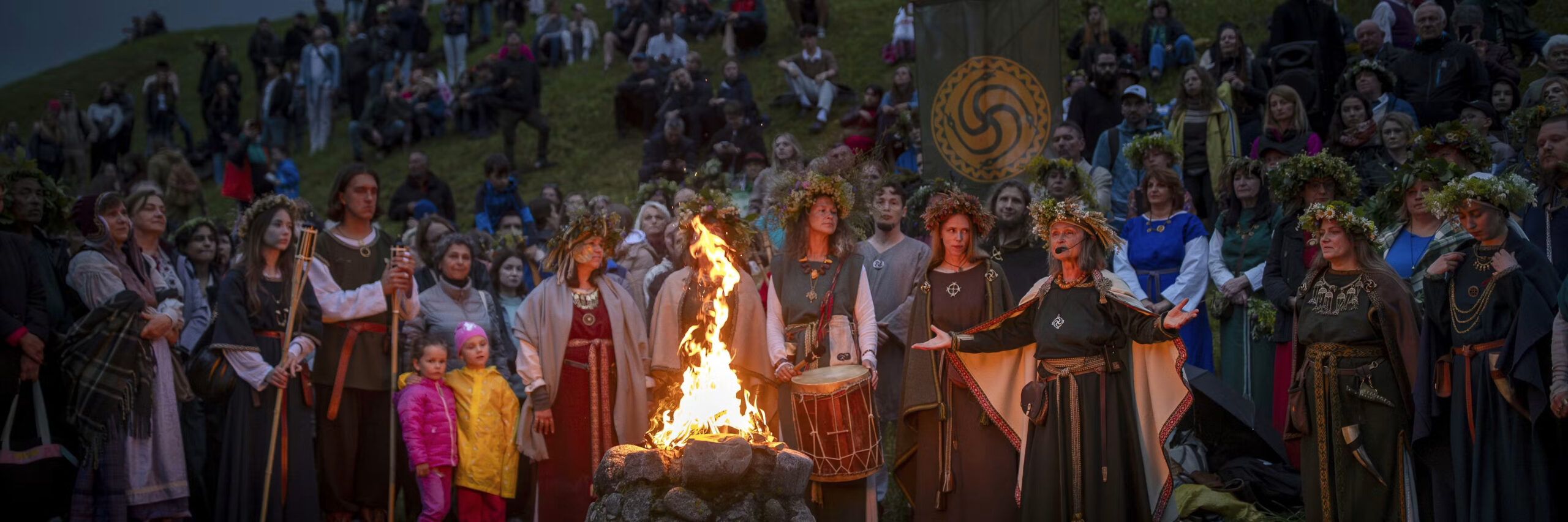
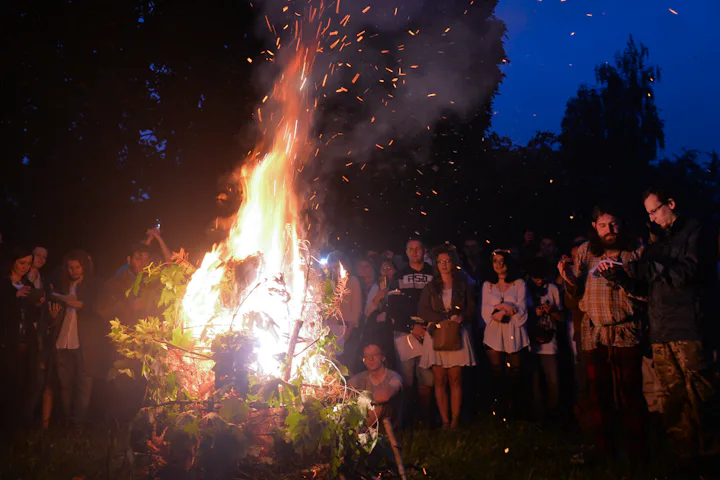
 People wear traditional clothes as they celebrate St. John’s Day and the Summer Solstice in Kernave, Lithuania, on 2024 Jun 23. AP Photo/Mindaugas Kulbis –
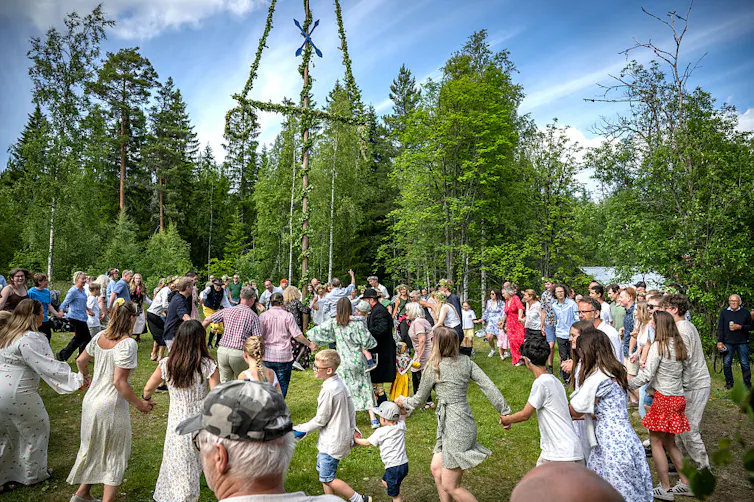
From the Mediterranean to Scandinavia and from France to Poland and beyond, Midsummer goes by many names, including the Italian “Festa di San Giovanni Battista” and the Swedish “Midsommar.” It’s “Leedopäev” in Estonia, “Juhannus” in Finland, and “Mihcamárat” for the Sami, the Indigenous people of Scandinavia. Celebrations mark the Summer Solstice, which takes place in the Northern Hemisphere around June 21.
–
Each morning from the time of the Winter Solstice to the Summer Solstice, the Sun rises a little farther to the north. As the Sun climbs higher in the sky, shadows grow shorter and days grow longer. At the Summer Solstice, the Sun “stands still” – the meaning of the Latin solstice – and begins its progression back toward the south. Days shorten, shadows lengthen, and the cold and dreariness of Winter return.
Europeans across the entire continent have noted this simple and inexorable cycle for millennia. Neolithic monuments such as Ireland’s Newgrange and England’s Stonehenge, both of which date from around 5,000 years ago, were built to mark solstices.
Lighting the bonfire
From the Mediterranean to the northern peripheries of Europe, the Summer Solstice has long been greeted as a time for rituals to gather luck, tell the future and ward off evil.
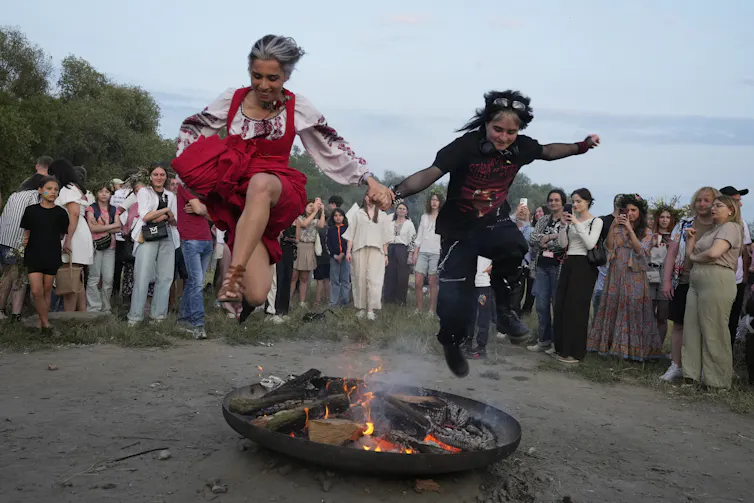
In Germany, northeastern France and many parts of Scandinavia and the Baltic, people still build elaborate bonfire pyres to light in the evening and tend long into the night. According to folk belief, stepping or leaping over the flames brings love and fertility, while the height of the flames predicts the coming year’s harvest.
–
Traditionally, many Europeans gathered dew, herbs or leaves on Midsummer eve, which was reputed to ensure health, beauty and good fortune. Some brought their cattle close to bonfires to breathe in the smoke, or scattered fields with ashes the next day. Although people today generally regard these beliefs as quaint reminders of the past, often they avidly participate, just in case – tying them to forebears centuries or even millennia ago.
Pagan, Christian and secular
Many of the names for the holiday, such as the Danish “Sankt Hans Aften” or Icelandic “Jónsmessunótt,” are connected with John the Baptist, the Christian saint whose birthday is celebrated June 24. Where Jesus’ birth is commemorated around the time of the Winter solstice, the Bible describes his cousin St. John being born precisely six months earlier, at the height of Summer. The interest in this connection between Jesus and John explains why the holiday takes place on June 24 – or in some countries, on the nearest Saturday – rather than on the actual solstice.
Medieval Christian authorities did not always relish the “pagan” celebrations of the day and occasionally decried peasants’ dancing, singing and other customs. During the 16th century’s Protestant Reformation, celebrations of Catholic saints’ feast days were suppressed, but Midsummer lived on as a secular holiday.
In places where Protestants and Catholics overlapped, such as the Netherlands, celebrating St. John’s eve became an emblem of Catholic identity. The Feast of St. John is celebrated as the “fête nationale” of the Canadian province of Québec in part to differentiate the province from the culture of its English Protestant neighbors.
–
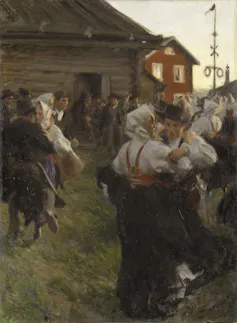
One of the most iconic images of Swedish celebrations of the day, Anders Zorn’s 1897 painting “Midsommardans,” or “Midsummer Dance,” reflects 19th-century anxiety that beloved traditions would disappear. Zorn himself paid for the erection of the Maypole depicted in his painting, seeking to preserve the picturesque custom in the region of rural Sweden where he lived.
Yet Zorn’s fears were unfounded. Much has changed, but Europeans remain appreciative of the simple and unchanging rhythms of the natural world, including the coming and passing of the season’s longest day.
–
You might also like


Want to write?
Write an article and join a growing community of more than 227,900 academics and researchers from 5,549 institutions.